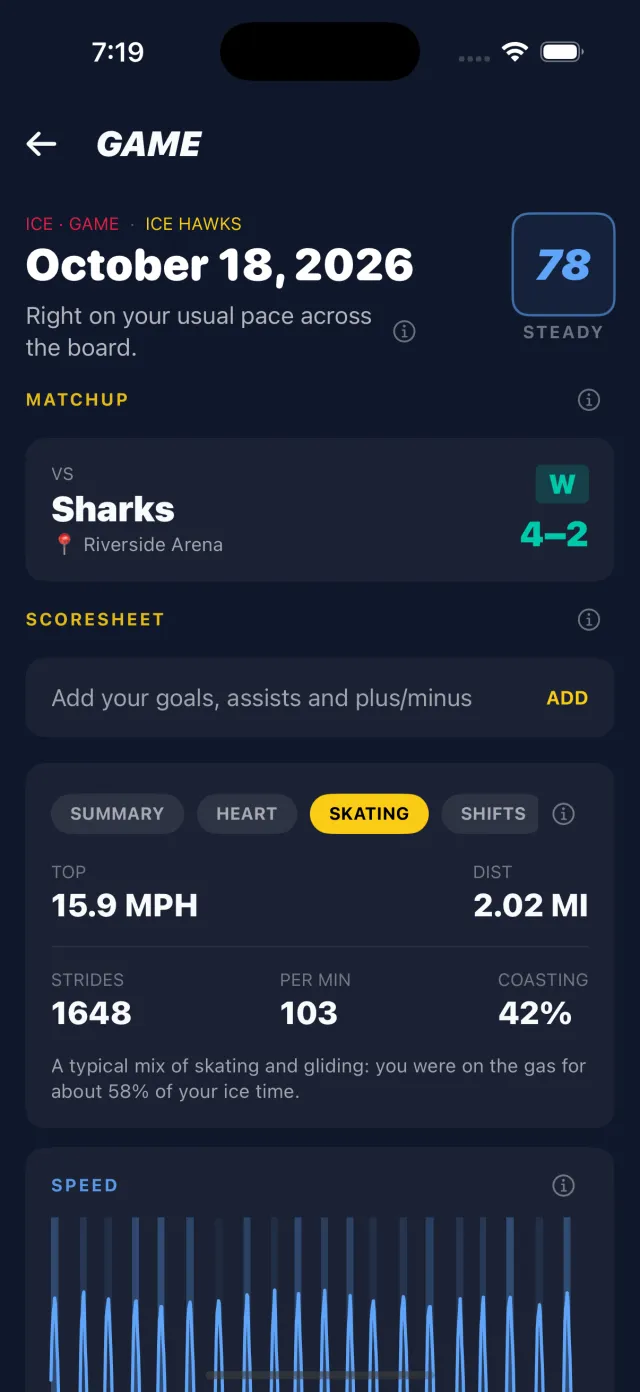
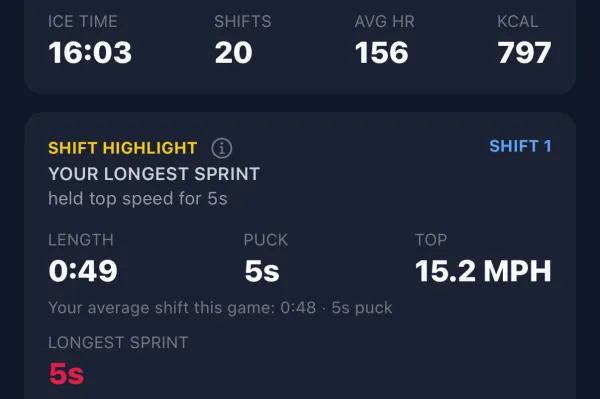
In a typical beer-league game, players average roughly 6 to 8 mph across a shift and top out somewhere in the mid-teens. The fastest NHL skaters reach well over 20 mph in a burst. Most of the difference isn't top speed, though. It's how much of every shift the pros spend at speed instead of gliding.
Where these numbers come from
We filmed our own rec-league games, tracked each skater on the rink video, and compared that, shift by shift, with what players' watches recorded. That's how NextShift's speed estimate was built, and it's where the beer-league numbers in this post come from. They are from adult rec hockey; your league may be faster or slower.
Average speed: slower than it feels
A shift is mostly not sprinting. You coast through the neutral zone, wait for a faceoff, stand at the blue line. Averaged across the whole shift, steady rec skating lands around 6 to 8 mph. Even an easy cruise sits close to 7 mph, which is why average speed barely changes from a good shift to a lazy one. The difference is in how often you get above that.
Top speed: mid-teens is good
Most beer-league skaters top out in the mid-teens of mph during a game. A genuine 18 mph or more is rare. When we checked every reading that high against the video, every one was a glitch rather than real skating. That's the biggest trap in wrist-based speed: one jolt or a jog to the handshake line looks like a breakaway. NextShift ignores readings that don't line up with you actually skating hard.
Distance: about 1.5 to 2.5 miles a game
A rec player who plays a regular shift covers around 1.5 to 2.5 miles in a game, depending on ice time and position. Forwards usually cover more than defence. It sounds small next to a run, but it's in sprints, on blades, with stops.
How the NHL compares
The NHL tracks every player with sensors in the puck and the jerseys. The fastest skaters in the league are clocked at well over 20 mph in a burst. The bigger gap is consistency: pros reach high speed on nearly every shift, and they keep shifts short so they can.
How to skate faster
- Full stride extension. Push all the way through to the toe and bring the foot back under you.
- Knee bend. Most rec skaters stand too tall. Lower means a longer push.
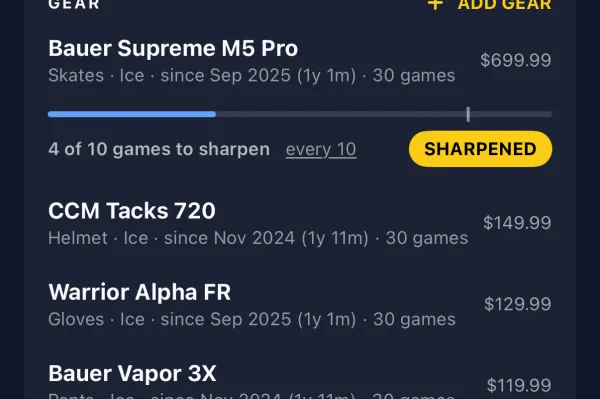
- Sharp skates. Dull edges slip on the push. See how often to sharpen.
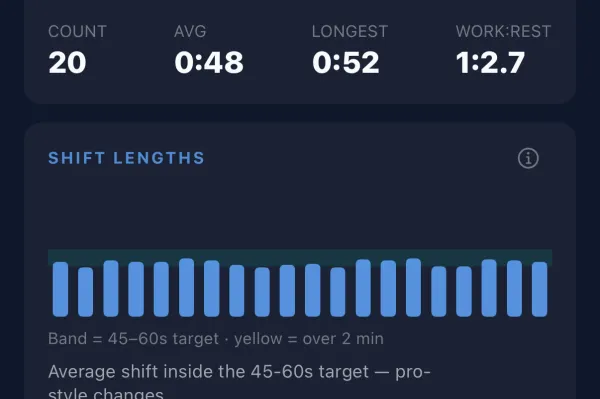
- Shorter shifts. You can't skate fast on tired legs. See how long a shift should be.
Measure yours
There's no GPS indoors, so a smartwatch has to work speed out from your arm's motion. NextShift does it on Apple Watch and Wear OS, and on a game it had never seen, its per-shift speeds landed within about 1 mph of the rink video. You get top speed, distance, strides per minute, how much of the game you spent coasting, and a pace chart showing whether you faded late.